
VENERATION
The Philippine persons continue to adhere to the Anitism religion. Sacred shrines are also called as spirit houses. They can range in size from small roofed platforms, to structures similar to a small house (but with no walls), to shrines. These shrines were known in various indigenous terms, which depend on the ethnic group association. They can also be used as places to store Taotao and caskets of ancestors. Among Bicolanos, Taotao were also kept inside sacred caves called moog.
During certain ceremonies, Anito are venerated through temporary altars near sacred places. These were called Latangan or Lantayan in Visayan and Dambana or Lambana in Tagalog. These bamboo or rattan altars are identical in basic construction throughout most of the Philippines. They were either small roof-less platforms or standing poles split at the tip. They held halved coconut shells, metal plates, or Martaban jars as receptacles for offerings. Taotao may sometimes also be placed on these platforms.
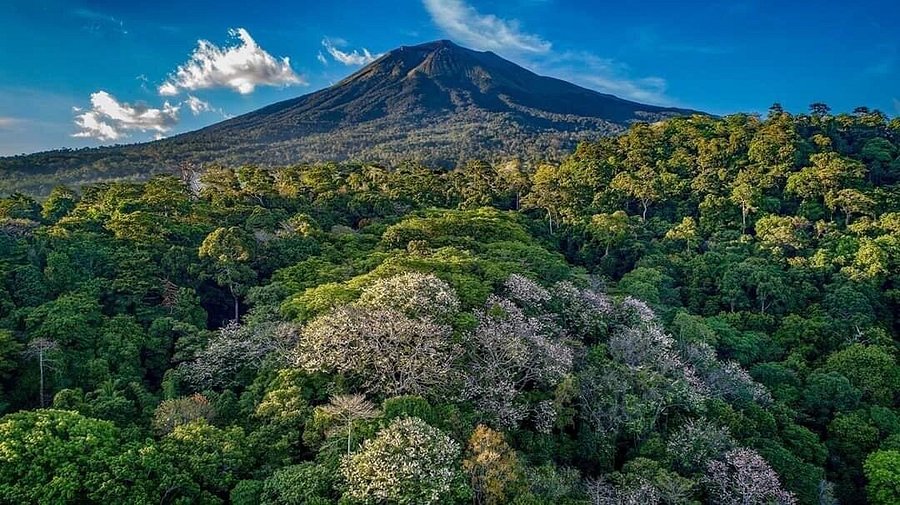
Other types of sacred places or objects of worship of Diwata include the material manifestation of their realms. The most widely venerated were balete trees (also called nonok, nunuk, nonoc, etc.) and anthills or termite mounds (punso). Other examples include mountains, waterfalls, tree groves, reefs, and caves.
In private they were wont to have in their own houses (and not outside them in any cave or like place) some kind of altars, on which they placed their taotao, and before them a small brasier with burning aromatics. They did not lack priests or priestesses for the sacrifices, which each one offered for his own purpose or necessity. The Tagálogs called those ministers Catalonan, and the Visayans Babaylan. Some were priests by inheritance and relationship; others by the dexterity with which they caused themselves to be instructed and substituted in the office of famous priests by gaining their good-will. Others made a pact to assist them, and to hold converse through their taotao or Anitos. The method of making the sacrifices hinged on the different purposes for which they were intended. If it were for a feast of ostentation and vanity that was being made to some chief, they called it “the feast of the great God.” The method of celebrating it was near the house of the chief, in a leafy bower which they erected especially for that purpose, hung round about with hangings in their fashion, which were made from odds and ends of pieces, of various colors. The guests assembled there, and the sacrifice having been prepared (on those occasions of a feast usually some good fat pig), the Catalona ordered the girl of the best appearance and who was best adorned, to give the spear-thrust to the animal, amid the ceremony of certain dances of theirs. When the animal was dead it was cut into bits and divided among all the people, as is the blessed bread. Although other animals were killed and eaten, and other viands and refreshments peculiar to those people were used, that animal was the one esteemed and was reverently consumed. The chief part of the feast was the drinking, accompanied, as ever, with much music and dancing.
TERMINOLOGY REGARDING SHRINES AND SACRED GROUNDS
Each ethnic group in the Philippines has their own terms concerning their shrines and sacred grounds, which are diverse in number:
Itneg: Tangpap, Pangkew, Alalot, Balaua, Kalangan, Saloko, Palaan.
Bontok: Sakolong.
Tagalog: Dambana, Lambana, Simbahan, Ulango.
Bicolano: Moog, Salagnat.
Tagbanwa: Sirayangsang.
Bisaya: Magdantang.
Visayan: Latangan, Lantayan.
Subanen: Maligai.
Teduray: Tenin, Ranga.
Bagobo: Buis, Parabunnian, Tambara, Tigyama, Balekat.
Tausūg: Langgal.
MAN-MADE SACRED GROUNDS
The shrine can be a sacred structure built with different materials, depending on the locality, but the usual shrine structure is made from indigenous wood with nipa roofs. No metal nails are used in its construction. The wood pieces are shaped in a way that each block would stick tightly to each other. At the same time, the wood bonds are strengthened by rattan strips.
NATURAL SACRED GROUNDS
In addition, not all shrines are house structures. Some shrines may be traditional non-Western cemeteries (libingan), ancient ruins or old places (sinaunang pook), rivers (ilog), mountains (bundok), mounds (burol), seas (karagatan), caves (yungib), lakes (lawa), forests (gubat) giant trees (malalaking puno) such as balete (one of the three most sacred trees for the Tagalogs, the other two being kawayan or bamboo and buko or coconut tree), and other places known to the natural and spiritual world, except for swamps, which are called buhay na tubig (living waters).
LUZON ★
ROMBLON (LUZON)
The islands of Romblon is home to multiple sacred caves used by the ancestors of the ethnic Asi, Onhan, and Romblomanon peoples; the most notable of which is Ipot Cave on the island of Banton, where the oldest warp ikat textile in Southeast Asia was found.
MOUNT IRAYA (BATAN ISLAND AND LUZON STRAIT)
A sacred mountain for the Ivatan people; there are two contrasting tales regarding the mountain, the first tale states that the mountain is a mother Goddess (although Iraya was initially depicted as an androgynous deity) overlooking her children (the Ivatans) for their protection, while the second tale states that if a ring of clouds appear on top of the mountain, Iraya is notifying the people for preparation due to an inevitable death of an elder, usually due to natural causes.
MAYON VOLCANO (ALBAY)
Home of the supreme deity of the Bicolano people, Gugurang; repository of the sacred fire of Ibalon; it is said to erupt, rumble, or spout lava or ash whenever the people committed heinous crimes, signaling the people to repent and undo evil things. According to Bicolanos Mayon is said to be the volcano that grew from the burial grounds of lovers Magayon and Panganoron. Thus, the ancient Bicolanos named it after the legendary princess-heroine Daragang Magayon (Beautiful Lady). After some time, the volcano was chosen as the abode of the supreme God of the Bicolano people, Gugurang, who also chose Mayon as the repository of the sacred fire of Ibalon. Numerous festivals and rituals are associated with the volcano and its landscape.
ANGONO PETROGLYPS (ANGONO & BINANGONAN)
Limestone wall traditionally used for healing purposes by the Tagalog people, who drew infant figures on the wall to "pass-on" a child's sickness onto it. The Angono - Binangonan Petroglyphs are petroglyphs carved into a rock wall. It consists of 127 human and animal figures engraved on the rockwall probably carved during the Late Neolithic, or before 2000 BC. They are the oldest known work of art in the Philippines. These inscriptions clearly show stylized human figures, frogs and lizards, along with other designs that may have depicted other interesting figures but erosion may have caused it to become indistinguishable. The engravings are mostly symbolic representations and are associated with healing and sympathetic magic.
MOUNT PINATUBO (ZAMBALES, TARLAC AND PAMPANGA)
Home of the powerful Kapampangan moon God, Apûng Malyari, who also rules over the eight sacred rivers; in contrast, the neighboring Mount Arayat is the home of the powerful sun God of war and death, Aring Sinukûan, who taught the early Kapampangans the industry of metallurgy, woodcutting, rice culture and waging wars. Aeta elders tell many stories about the history of the mountain, the best known being that it was once a Batung Mabye (Kapampangan language for "living stone"). It was said to have been planted on a kingdom by a displeased sorcerer but relocated by a hero. The mountain was soon turned into the abode of Apo Namalyari ("The lord of happenings/events"), the pagan deity of the Sambal, Aetas and Kapampangans living on the Zambales range. It was said to comprise the whole mountain range until Sinukuan of Mount Arayat (the God of the Kapampangans) became a strong rival of Namalyari. Their fight, which took place over the center plains, shattered the mountain into smaller bodies and Mount Arayat lost its center peak. Other versions have it that Pinatubo's peak shattered because of Namalyari's immense fury in an attempt to teach humans the meaning of fear and show how misdeeds will be punished.
MOUNT PULAG (BENGUET, IFUGAO AND NUEVA VIZCAYA)
The tallest mountain in Luzon island and is home to the tinmongao spirits; believed to be the sacred resting ground of the souls of the Ibaloi people and other ethnic peoples. The Ibaloi people of Benguet mummify their dead and house them in caverns in the mountain.
MOUNT CAIMANA (CUYO)
A sacred mountain for the Cuyunon people and is said to be the home of their supreme deity, Diwata ng Kagubatan; the Cuyunon used to perform a complex ritual for the deity on top of the mountain during her feast day.
MOUNT KECHANGON (LUBUAGAN)
A sacred mountain in Lubuagan, Kalinga, which is the abode of the tinakchi, a race of mysterious and highly respected mountain-dwelling nature beings known as the "people who can't be seen"; some accounts tell that the tinakchi can use teleportation and invisibility, usually to safeguard nature and its wildlife.
KAMHANTIK (QUEZON)
A sacred site in Quezon province filled with unique limestone coffins made between 890–1030 AD; locals believe that the limestone tombs and associated objects were made by forest deities.
MOUNT MAKILING (LAGUNA AND BATANGAS)
A sacred mountain in southern Luzon, believed to be the abode of Makiling, a Goddess sent by Tagalog supreme deity Bathala to aid mankind in the area; the mountain is highly associated with the gifts of nature; due to its importance, various religious sects have made the mountain an annual pilgrimage site. Makiling is a beautiful fairy or Goddess who watches over the mountain. She is known for her beauty and is often shown with accompanied by tiny winged fairies called lambana. She protects the mountain and helps the people who rely on it for food and resources. Some stories also say that the nearby lake, Laguna de Bay, and its fish are part of her care.
MOUNT SAN CRISTOBAL (LAGUNA AND BICOL)
Mount San Cristobal is considered the "Devil's mountain" Philippine stories Although that was not always the case. The mountain was previously considered as a sacred site, along with Mount Banahaw, under the indigenous Philippine folk religions, where the two mountains are said to be protected by the native Tagalog deities.
MOUNT MANTALINGAJAN (PALAWAN)
A sacred mountain revered by the local ethnic groups as the "mountain of the Gods" in southern Palawan; an ancient race known as Tau't Daram (People of the Night) is believed to have lived in the mountain's forest canopies, told by the people's chants which refer to the race as "the shadows".
TICAO (MASBATE)
An island in east Masbate, which is home to thousands of artifacts, including ancient human teeth, burial jars, ceramics, accessories, ancient stone inscriptions, cave petrographs, and cave petrogylphs; the island's cultural landscapes, notably its caves, are believed to be the home of a variety of nature spirits of the land, while its waters are filled with manta rays and sea spirits.
MALINAO VOLCANO (BICOL)
The volcano is believed to be the home of the ancient Bicolano God of beasts, Asuang, who challenged the supreme God of the Bicolano, Gugurang. He is worshiped alongside his friend, Bulan, the boy-god of the moon.
SLEEPING BEAUTY MOUNTAIN (KALINGA)
A sacred mountain ridge located at Kalinga; there is a folkloric legend regarding the mountain, passed on for several generations. The tale is one of Kalinga’s most loved bedtime stories popularly sang in the native ballad called Ullalim. The tale of two lovers ended by a tribal war has different versions, depending on the tribe where the story originated, the name of the protagonists are different, but with only slight variation in the story. One version of the story is about Lubting and Mawanga; one, about Dinayao and Binsay; and the other, Edonsan and Banna - all ending with the female protagonist resting on Patukan, in despair, after the loss of her loved one.
VISAYAS ★
MOUNT MADIA-AS (PANAY AND WESTERN VISAYAS)
Home to the Hiligaynon and Karay-a death God, Sidapa, who measures mortal lives through an ancient tree; later stories say that the comely moon God, Bulan, eventually lived with the robust and handsome Sidapa in his mountain home after a complex courtship and rescue story, which led to their divine marriage.
KANLAON (VISAYAS)
A sacred volcano in Negros Island surrounded by a variety of myths; a story states that its vicinity was home to a nation ruled by Kan Laon; it was also formerly home to a dragon-like monster which was slayed by Kan Laon, a king or datu in Negros; later stories say that the supreme Goddess of the Hiligaynon people, Laon, now lives in the volcano. Her name is variously rendered as Lahon, Lalaon (or Lalahon), Lauon, Malaon, Raom, and Laonsina (or Alunsina) among the different Visayan groups.
SIQUIJOR (VISAYAS)
The entire island province of Siquijor has been a sacred ground since ancient times due to its associated mystic traditions and sites; legend tells that the island rose from the sea after a strong earthquake.
BIRI (NORTHERN SAMAR)
A sacred island with striking rock formations; the Waray people believe that Biri is the home of the Goddess, Berbinota, who was initially a beautiful mortal woman who ruled the area's vicinity; stories say that enchanted beings kidnapped the mortal Berbinota in an attempt to make her their ruler, which eventually led to her enthronement as a Goddess.
LANGUN-GOBINGOB CAVES (CALBIGA)
A sacred cave system in Samar believed to be the home of ancient spirits and the resting ground of Waray people's souls; it is the second largest cave system in Asia.
SABULUAG (GIGANTES ISLANDS)
Islands east of Iloilo that are known for its sacred caves, remains of ancient ancestors, and enchanted and unseen beings lurking throughout the islands; created by the primordial giants Ilohaylo and Necrosamo in Hiligaynon mythology, huge human bones were found on Bakwitan cave, which led to the island groups' name change into "Islas de Gigantes".
MOUNT LANTOY (ARGAO)
A sacred mountain in southern Cebu, believed to be the abode of the Goddess Cacao, who lives in a cave and maintains a plantation-of-sort within the mountain; the Goddess is said to sell her produce by sailing her golden ship from a nearby river onto the sea.
MINDANAO ★
MOUNT CANATUAN (ZAMBOANGA DEL NORTE)
A sacred mountain in Siocon, Zamboanga del Norte for the Subanen people, who believe that the mountain is the home of a variety of well-respected nature spirits; the divine mountain was destroyed by a mining company, and a huge mass of it has been transformed into the Canatuan mine, despite indigenous protests.
PUNTA FLECHAS (ZAMBOANGA DEL SUR)
A sacred landmass at the end of Zamboanga del Sur; the Iranun people believed that the site is the home of spirits who beat the waves, making it harder to sail; arrows are shot onto the rocks of the area as offerings to the spirits.
BUD BONGAO (BONGAO ISLAND)
A sacred mountain for the Sama-Bajau and Tausug peoples; guarded by spirits and monkeys in Tawi-tawi.
MOUNT APO (COTABATO AND DAVAO DEL SUR)
The tallest and largest mountain in the Philippines and an expansive sacred mountain for the Manobos, Bagobo, Ubos, Atas, Kalagan and Tagacaolo peoples; the mountain is often referred as "grandfather" or "elder"; some ethnic peoples there offer sacrifices to the deity, Mandarangan, for good health and victories in war; in Bagobo beliefs, it is said that two gigantic eels used to live in the mountain's rivers, one went east, lived, and became the ancestor of eels in the sea, while the other one went west inland, eventually dying and becoming the western foot ridges of Mount Apo; the Bagabo also believe that Apo Sandawa, God of blacksmiths, lives in Mount Apo with the deity of the forge, Tolus Ka Gomanan, who is venerated in a ritual called Gomek-gomanan.
HINATUAN ENCHANTED RIVER (HINATUAN)
A sacred river believed to be protected by supernatural beings; the Surigaonon people believe that certain fishes in the river cannot be caught due to enchanted protection.
MOUNT PANDADAGSAAN (DAVAO DE ORO)
A sacred mountain for many ethnic groups such as the Mandaya people in New Bataan, Compostela Valley; protected by a variety of nature deities; people who disturb the area or go there without divine permission are said to lose their way and succumb to the mountains.
AGUSAN MARSH (AGUSAN DEL SUR)
An expansive sacred marsh believed to be the home of numerous celestial spirits; Lumads perform the panagtawag rituals so that a visitor would not be harmed in the marsh.
MOUNT BALATUKAN (MOUNT BALATUKAN RANGE NATIONAL PARK)
In Bukidnon mythology, it is believed that upon death, all seven makatu (souls of a single person) combine into one and journeys into Mount Balatucan for final judgment. The soul first travels to the huge rock, Liyang, which is followed by a journey to Binagbasan, where the Tree of Records grows. After making a mark on the tree, the soul journeys to Pinagsayawan, where the soul must dance and sweat for atonement. The next journey is to Panamparan, where the soul gets a haircut to be presentable at Kumbirahan, where a banquet awaits the soul. The God Andalapit then leads the soul to the foot of Mount Balatucan, where the Gods of the dead assemble to judge the soul. Good souls are sent to Dunkituhan, the cloud capped stairway that leads into heaven at the summit of Balatucan. An evil soul is sent to a river of penance for atonement until forgiven. Souls at the river sweat blood, the source of the river’s color and fishy scent. A forgiven soul afterwards also goes into Balatucan’s summit.
BUD DAJO (SULU ARCHIPELAGO)
Bud Dajo is a sacred mountain for the indigenous peoples of the Sulu archipelago.
PULANGI RIVER (BUKIDNON AND COTABATO)
A sacred river in central Mindanao since ancient times; various myths are associated with the river such as the appearance of the Patakoda, and the routes taken by the Maguindanaon epic heroes Indarapatra and Sulayman.
MOUNT KALATUNGAN (BUKIDNON)
The summit of the mountain is known as Apu ("revered elder," compare with Mount Apo) by the Manobo people, because it is believed to be the abode of a spirit of the mountain (collectively known as Elembiten, "invoked spirits"). The spirits work in a hierarchy of spiritual beings known as Kedelisayan, and are regarded guardians and nurturers of the tribes. In the Manobo mythology, the whole mountain was formerly known as Apu before the great flood submerged the lands and only the tip of the mountain remained above water as a small island. This island was known as Keretung where a human survivor named Apu Agbibilin and two trees remain. The two trees were closely-spaced and when the wind blew against them, it caused them to rub against each other and emit a spark that became a small flame. Apu Agbibilin used the flame to build a fire which emitted smoke. The smoke was seen by survivors also stranded on the peaks of other mountains. They came to Apu Agbibilin to ask for fire and from them arose a new people known as the Menuvù (Manobo).
MOUNT KITANGLAD (BUKIDNON)
Mount Kitanglad is part of the ancestral lands of three Lumad groups: the Higaonon, the Talaandig, and the Bukidnon people. In their common oral legend of Olaging, there was once a great flood that submerged the area leaving only the tips of the mountains visible (a story shared by neighboring Mount Kalatungan). During the flood, the visible portion of Mount Kitanglad resembled a patch of tanglad (lemongrass), an important medicinal plant, and was thus named "Kitanglad" (also spelled "Katanglad") by the legendary datu Agbibilin. Agbibilin is said to have four sons, each of the sons were the ancestors of the modern-day Manobo; the Maranao; the Maguindanao; and finally the three groups native to Kitanglad: the Higaonon, Talaandig, and Bukidnon. The four brothers and their tribes were constantly at war with each other over territory, until Agbibilin commanded them to settle their dispute by delineating their territories. They met at a house in Barabyas, Tikalaan (in Talakag, southwest of Kitanglad) and performed the peace pact ritual (Tampuda ho Balagon). In the pact, the brothers marked territories to prevent further war, using rivers and peaks of mountain ranges (tagaytay). Mount Kitanglad as well as northern Bukidnon and Misamis Oriental went to the Higaonon-Talaandig-Bukidnon group.
MUSUAN PEAK (BUKIDNON)
According to the legend, Musuan Peak was made out of feces dropped by a man named Tapogak. One day a man named Babaydan and his whole family along with Tapogak bringing his belongings were taken up to heaven. Afterwards, Tapogak found some honey and ate more of it, causing him to defecate from heaven atop. Because of his gluttony, he was kicked out of heaven by his friends, fell down and never reached heaven again. His feces became a mountain named "Indus ni Tapogak," which means "Tapogak's feces" in Umayamnon language, now known as Musuan Peak.
OTHER
KALIPUNG-AWAN (PHILIPPINE SEA)
A sacred fishing ground for the people of Catanduanes and northeast Camarines Sur since ancient times; the indigenous name means "loneliness from an isolated place," referring to the feeling of fishermen who catch marine life in the area for days without their families; national culture refers to the place as Benham or Philippine Rise.